
Press brake tooling refers to the precision tools used in sheet metal bending operations, primarily consisting of the punch (upper tool) and the die (lower tool). These tools are mounted on a press brake machine, where controlled force is applied to deform metal sheets into specific angles and shapes.
The bending process is based on plastic deformation. When the punch presses the material into the V-opening of the die, the material yields and forms a permanent bend. The accuracy of this process depends heavily on tooling design, precision, and compatibility.
High-quality press brake tooling directly determines:
- Bending angle accuracy
- Dimensional consistency
- Surface finish quality
- Production efficiency
In modern sheet metal fabrication, tooling is no longer just a consumable—it is a critical factor in achieving precision manufacturing and automation.

Amada Press Brake Tooling
Amada press brake tooling represents one of the most widely adopted European-style standardized tooling systems in the global market. It is known for its excellent balance between precision, versatility, and cost-effectiveness.
Amada tooling is manufactured with tight tolerances and standardized dimensions, allowing compatibility across a wide range of press brake machines. This standardization simplifies tool replacement and reduces setup complexity.

Key Features of Amada Tooling
1. High Precision Manufacturing
Amada tooling is typically ground to tolerances around ±0.02 mm. This level of precision ensures consistent bending results, especially in medium-precision industrial applications.
2. Standardized System Design
The tooling follows a unified system that allows interchangeability. Manufacturers can easily source or replace tools without compatibility issues.
3. Cost-Effective Solution
Compared to high-end systems, Amada tooling provides a more affordable entry point while still maintaining reliable performance.
4. Ease of Use and Maintenance
The relatively simple clamping and alignment systems make Amada tooling suitable for operators with varying levels of experience.
Common Amada Tool Types
Punch Types:
- Straight Punch: Used for standard bending operations
- Gooseneck Punch: Designed to avoid interference when bending complex profiles
- Acute Angle Punch: Suitable for sharp angle bending
Die Types:
- Single V-Die: Most commonly used for general bending
- Multi V-Die: Allows multiple thickness applications with one tool
- Special Forming Dies: For hemming or custom shapes
These tooling options enable Amada systems to handle a wide variety of bending tasks, making them highly versatile for general manufacturing environments.
WILA Press Brake Tooling
WILA press brake tooling is widely recognized as a high-end, precision-focused tooling system, designed for advanced manufacturing environments where efficiency, automation, and repeatability are critical.
Unlike traditional tooling systems, WILA is not just about the tools themselves—it provides a complete tooling ecosystem, including clamping systems, alignment mechanisms, and automation integration.

Key Features of WILA Tooling
1. Ultra-High Precision
WILA tooling is manufactured with extremely tight tolerances, often reaching ±0.01 mm. This ensures exceptional repeatability and accuracy, especially for high-precision industries.
2. Hydraulic Clamping System
One of WILA’s defining features is its hydraulic clamping technology. This allows:
- Rapid tool changes
- Reduced manual intervention
- Improved operator safety
3. Self-Centering Mechanism
WILA tooling systems automatically align tools during installation. This eliminates human error and ensures consistent positioning.
4. High Hardness and Durability
Tools are heat-treated to high hardness levels (up to ~60 HRC), significantly improving wear resistance and extending tool life.
5. Automation Integration
WILA systems are designed for compatibility with CNC-controlled press brakes, enabling automated alignment and compensation.
WILA Tooling System Components
1. New Standard Tooling
- High precision and durability
- Suitable for modern CNC press brakes
2. American Style Tooling
- Compatible with traditional American-style machines
- Offers flexibility for mixed equipment environments
3. Tool Holders and Clamping Systems
- Hydraulic or manual clamping options
- Fast setup and secure positioning
4. Alignment and Compensation Systems
- Automatic Tx/Ty alignment
- CNC-controlled adjustments for precision bending
These components make WILA a complete solution rather than just a tooling supplier.
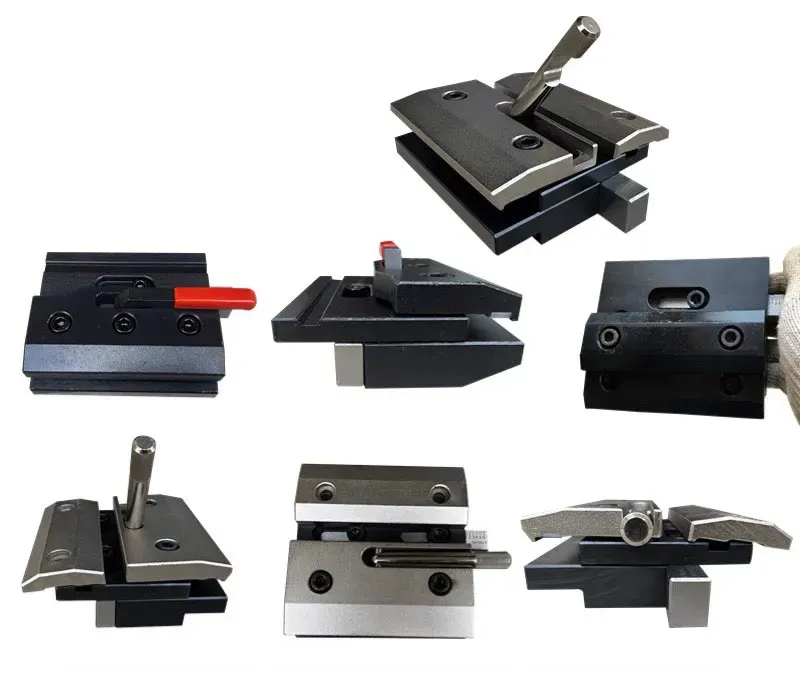
WILA vs Amada Press Brake Tooling: Key Differences
When comparing wila press brake tooling and amada press brake tooling, several critical differences emerge:
1. Precision
- WILA: Ultra-high precision (±0.01 mm)
- Amada: High precision (±0.02 mm)
WILA is better suited for industries requiring tight tolerances, such as aerospace or electronics.
2. Tool Change Efficiency
- WILA: Hydraulic quick-change system
- Amada: Manual or semi-automatic change
WILA significantly reduces downtime, especially in high-mix production environments.
3. Automation Level
- WILA: Fully compatible with automated systems
- Amada: Limited automation integration
WILA excels in smart manufacturing and Industry 4.0 environments.
4. Cost
- WILA: Higher initial investment
- Amada: More economical
Amada is ideal for cost-sensitive operations, while WILA offers long-term ROI through efficiency gains.
5. Application Scenarios
Amada Tooling:
- General sheet metal fabrication
- Medium precision requirements
- Stable, repetitive production
WILA Tooling:
- High-precision industries
- Frequent tool changes
- Automated production lines
Press Brake Tooling Selection Basics
Regardless of the system chosen, proper tooling selection is essential for achieving optimal bending results.
V-Die Selection Rule
A widely accepted guideline in bending operations is:
- V-opening = 8 × material thickness
Adjustments:
- Thin materials: 6 × thickness
- Thick materials: 10–12 × thickness
This rule helps balance bending force, accuracy, and tool life.
Material Considerations
Different materials behave differently during bending:
- Mild steel: Standard bending behavior
- Stainless steel: Higher strength, requires more force
- Aluminum: Softer, prone to surface marks
Tool selection must account for:
- Material strength (UTS)
- Elastic recovery (springback)
- Surface sensitivity
Bending Radius and Accuracy
The internal bending radius is another critical factor:
- Recommended: R ≈ material thickness
If the radius is too small:
- Risk of cracking
If too large:
- Reduced dimensional accuracy
Proper punch and die selection ensures optimal radius control.
Additional Practical Guidelines
- Minimum flange length: ≥ 4 × material thickness
- Ensure punch and die compatibility
- Use precision-ground tooling for critical applications
- Regularly inspect and maintain tooling
GWMT Press Brake Tooling Manufacturer
For manufacturers seeking a reliable and cost-effective press brake tooling solution, GWMToffers a strong alternative that combines precision, durability, and competitive pricing.
GWMT specializes in:
- High-quality press brake punches and dies
- Compatibility with both Amada and WILA systems
- Custom tooling solutions for complex bending applications
With advanced manufacturing processes and strict quality control, GWMT tooling ensures:
- Stable bending performance
- Long service life
- Reduced overall production cost
For companies looking to optimize their sheet metal operations without excessive investment, GWMT provides a practical and professional solution.


